

A bigger social following won’t automatically bring more people to your live stream. To grow internet radio audience numbers, help the right listeners discover your station, give them a reason to tune in, and make it easy to return.
When listener numbers are low or unpredictable, promotion can feel like guesswork. Should you post more often, try another platform, or spend time improving the listening experience? Instead of doing everything at once, choose practical actions, connect them to clear goals, and check what brings people to your stream.
This guide will help you build a manageable audience-growth plan, even if you’re working with a small team or budget. You’ll learn how to define your station’s appeal, promote it where potential listeners are likely to find it, turn social engagement into tune-ins, and encourage repeat listening. You’ll also see how consistent programming, dependable stream access, and simple tracking fit together. More discovery. More reasons to return. Less guesswork.
Key Takeaways
- Define the listener your station is built for, then make its format and distinctive appeal clear.
- Use consistent schedules, show descriptions, and station identity to give listeners a reason to return.
- Compare promotion channels by audience fit, effort, control, and the signals that show whether they’re working.
- Test a focused 30-day plan to grow internet radio audience numbers, using a baseline you can track consistently.
- Make streaming and listening access convenient, and use Auto DJ to help keep scheduled programming on air when a host is unavailable.
Start with the listener: define who your internet radio station serves
Trying to reach everyone can make your station’s identity too vague to attract anyone in particular. A clear listener profile gives your programming and promotion a sharper focus. To grow internet radio audience numbers, start by asking who is most likely to value what you broadcast and what would make them tune in again.
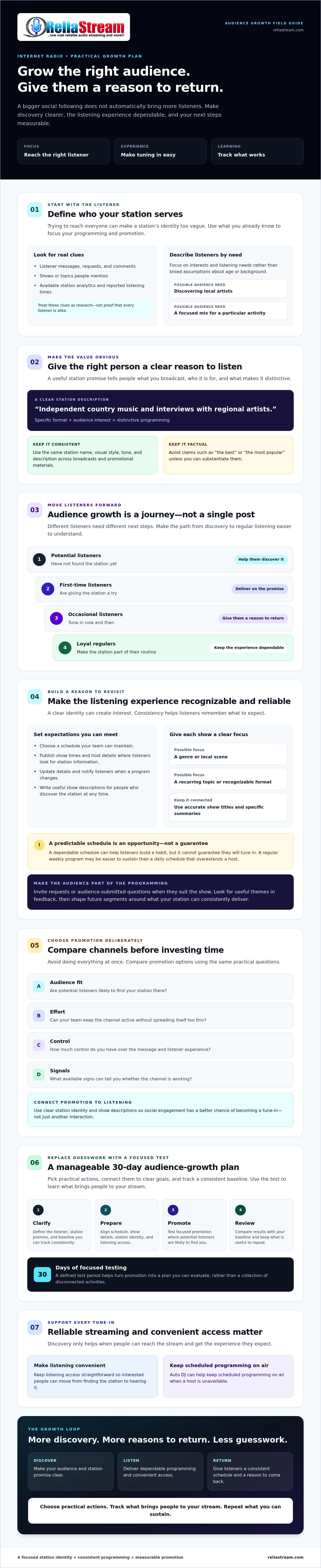
Audience growth involves helping potential listeners discover your station and giving first-time listeners a reason to return. Keep the stages in view: potential listeners haven’t found you yet; first-time listeners are giving you a try; occasional listeners tune in now and then; loyal regulars make your station part of their routine. Each group needs a different next step.
Your station’s music, format, community, and distinctive value are the building blocks of its identity. For background on the medium, see this overview of Internet radio. Then put your station’s identity into a simple description: what do you play or discuss, who is it for, and what can listeners expect that they won’t get from a generic playlist?
How do you identify the right audience for your station?
Start with evidence you already have. Review listener messages, requests, comments, and any station analytics available to you. Look for patterns in what people ask for, which shows they mention, and when they say they listen. Treat these clues as research, not proof that all your listeners are alike.
Describe people by their interests and listening needs, rather than making broad assumptions about age or background. Your station might serve local music fans looking for new artists, for example, or listeners who want a focused mix for a particular activity. Choose communities, genres, or local interests that you can serve consistently through your programming.
What should your station promise listeners?
Make a promise you can keep. State your format, the programming listeners can expect, and what makes your approach distinctive. “Independent country music and interviews with regional artists” gives potential listeners a clearer picture than “great music for everyone.” Let that description guide your show choices, schedule, and promotional messages.
Keep the promise factual. Avoid claims such as “the best” or “the most popular” unless you can substantiate them. A useful station description helps the right person quickly recognize why your broadcast may be worth a listen.
Make your internet radio station worth discovering and revisiting
A clear station identity can get a listener interested. A consistent experience gives them a reason to remember you. Use the same station name, visual style, tone, and description across your broadcasts and promotional materials. When those details line up, people can recognize your station wherever they encounter it.
Consistency also means setting expectations you can meet. Choose a schedule that fits your available hosts and content, then publish show times and host details wherever listeners look for station information. If a program changes, update those details and let your audience know. Since not everyone can tune in live, write show descriptions that are useful to people discovering the station at any time.
How can a consistent schedule encourage repeat listening?
A predictable schedule can help listeners build a habit, but it can’t guarantee they’ll tune in. Choose a rhythm your team can maintain instead of promising more shows than you can reliably deliver. A weekly themed program at a regular time, for example, may be easier to sustain than a daily schedule that depends on an overextended host.
Takeaway: A dependable schedule gives listeners a clear opportunity to return; it doesn’t guarantee they’ll be there.
How can programming give listeners a reason to return?
Give each show a clear focus, such as a genre, local scene, recurring topic, or recognizable format. Invite requests or audience-submitted questions when they suit the program, then use responses to shape future segments. Keep summaries specific, too. “New releases and interviews with local artists” tells newcomers more than “great music and chat.”
Listener questions, requests, and feedback can reveal what deserves more attention. Look for useful themes rather than relying on one-off comments, and make sure your programming can follow through. For broader context on how people engage with audio, Pew Research Center’s online audio listenership trends fact sheet is a helpful reference. Your station still needs its own voice and reasons to listen.
Keep the experience connected from broadcast to promotion. Use accurate show titles and descriptions in posts, station listings, and any listening platforms you use. If you’re reviewing how streaming access supports a consistent listener experience, explore internet radio hosting options as one part of the setup. Reliable access supports the experience; the programming gives people something to return for.
Compare internet radio audience-growth channels before you invest time
You don’t need to promote your station everywhere. Choose channels that your likely listeners use and your team can maintain. Some channels help new people discover the station; others make it easier to stay connected and return. To grow internet radio audience numbers, track a useful signal for each channel instead of judging success by activity alone.
Use this comparison to choose where to start. Effort is relative, and every channel needs regular attention to keep working.
- Station website: Useful for people checking out your station, schedule, or shows. It takes initial setup and regular updates, but you control the information. Track visits to listening instructions and clicks on the stream.
- Search discovery: Useful when listeners look for a specific genre, show, or local music source. Clear page titles and accurate show descriptions take ongoing effort. You control your site content, not search placement. Watch for relevant search visits and stream clicks.
- Social media: Can introduce shows to communities already active on a platform. It takes consistent posting, and each platform controls how posts are distributed. Promote a particular host, guest, song theme, or broadcast moment, then track link clicks and listening activity around the post.
- Email: Suits listeners who already want station updates and reminders. It requires a useful, regular message and a list you manage. Track opens, clicks, and visits to show or stream pages as signs of continued interest.
- Partnerships: Local venues, community groups, or artists may help you reach people with a genuine connection to your format. Coordination takes time, but a relevant partner can share your station with an established community. Measure referral visits, inquiries, or listeners mentioning the partner.
- Listening devices and apps: These make access more convenient for people who already know your station. Setup and upkeep vary, and platform rules may limit your control. Measure app usage or listening activity where those figures are available. Custom apps can extend access through supported devices, but they don’t guarantee discovery or audience growth. See radio streaming app development for more on this option.
Choose channels you can sustain
Start with one discovery channel and one retention channel that fit your audience and capacity. A station serving a local music community, for example, might share specific show clips through a relevant group, then use email to remind interested listeners about upcoming programs. Give each effort a clear purpose and review its signal before adding more work.
Make listening access clear
Put simple listening instructions on your website, with a link that’s easy to find on mobile and desktop. If you share a stream link, explain what listeners should expect when they open it. For background on secure links, read this guide to SSL radio streaming guidance. Secure access supports a smoother listening experience, while discovery still depends on the channels and programming you build.
Build a manageable 30-day plan to grow your internet radio audience
A short experiment is more useful than scattered promotion. Choose one audience, one programming improvement, and a small number of channels you can maintain. For example, focus on local jazz listeners, add a recurring segment featuring regional artists, and promote it through your website and a relevant community partner. Keep the test narrow enough to understand what may be helping.
Before you begin, record a baseline using the station analytics and channel data you can access. Use the same definitions throughout the month. If you can’t track a measure reliably, leave it out instead of guessing.
- Week 1: Record your baseline and prepare the programming improvement, show description, and promotional materials.
- Week 2: Launch the updated program and promote it through your selected channels.
- Week 3: Continue the test. Note listener feedback, referrals, and any schedule or promotion changes.
- Week 4: Review results against the baseline, identify useful signals, and decide what to repeat, adjust, or stop.
What should you measure when growing a radio audience?
Depending on the reporting available, track listener sessions, listening duration, returning listeners, and referrals to your stream. Write down what each measure means for your station. For instance, decide whether you’re counting sessions or individual listeners, and compare the same type of report each time.
Keep context with the numbers: note when a show aired, what you promoted, and whether the schedule changed. A temporary traffic spike or a rise in social followers may show attention, but it doesn’t prove people listened for long or came back. Look for repeatable patterns, not a single standout day.
How do you turn growth experiments into a repeatable routine?
Where practical, change only a limited number of things at once. If you change the show format, schedule, and promotion approach together, it’s harder to tell which contributed to a shift. Keep the activities that serve your intended audience and fit your team’s capacity. Then plan the next month’s test around a clear question informed by what you learned.
Operational needs matter, too. As you review what your station can sustain, explore this budget internet radio hosting guidance. Hosting supports access and delivery; it doesn’t guarantee audience growth. If you’re assessing streaming options for your station, explore ReliaStream radio hosting as part of your plan.
Use reliable streaming and convenient access to support audience growth
When a listener clicks “Listen,” they should find a clear path to your stream. Hosting delivers station audio online, while accessible links and listening options help reduce friction. These details support a better listener experience, but they don’t guarantee more listeners. Programming and promotion still do the work of attracting an audience.
How can hosting support a consistent listening experience?
ReliaStream offers ShoutCast and IceCast hosting, two streaming technologies stations can consider when choosing how to deliver audio online. The right fit depends on your station’s setup and needs, not on any promise of audience growth. If you’re comparing the options, read this ShoutCast and IceCast comparison.
Make the listening link easy to locate and use on your station website and promotional materials. ReliaStream’s SSL-secured stream links support convenient access. Explain clearly where the link leads and what listeners should do if they have trouble connecting. A straightforward listening path won’t make someone discover your station, but it can help them follow through once they decide to tune in.
When should a station consider apps or Auto DJ?
Auto DJ can help keep scheduled content playing when a live host isn’t broadcasting. It can be useful for stations that want programming to continue between live shows or when a host is unavailable. Plan the schedule and content deliberately, and make sure automated programming still reflects the station’s identity and audience promise.
Custom apps may be worth considering if your listeners want another way to access the station. ReliaStream develops custom radio applications for Roku, Google TV, and Amazon Fire TV, as well as Alexa streaming skills. These options can extend access through supported platforms, but an app alone doesn’t guarantee discovery, tuning, or repeat listening. Check that the platforms fit your audience and that the app details meet your station’s needs.
Technology is one part of a broader plan to grow internet radio audience numbers: make listening dependable and convenient, then keep earning attention with relevant programming and consistent promotion. If you’re assessing the technical setup behind your station, explore ReliaStream hosting options and compare them with your requirements.
Put your audience-growth plan into action
To grow internet radio audience numbers, focus on the listeners your station can serve best, give them a consistent reason to return, and choose promotion channels you can sustain. Test a manageable plan, track meaningful listening signals, and adjust based on what you learn. Small, informed steps beat scattered effort.
A smooth stream and convenient access support the experience, but they can’t replace distinctive programming or guarantee growth. ReliaStream has provided internet radio hosting since 2008, with ShoutCast and IceCast hosting, SSL-secured links, and Auto DJ access to support station delivery and scheduled programming.
Ready to check whether your technical setup fits your station’s needs? Explore ReliaStream hosting options. Keep your plan focused, stay close to listener feedback, and build momentum one useful improvement at a time.
Frequently Asked Questions
How can I grow my internet radio audience?
To grow internet radio audience numbers, improve how people discover the station, make listening straightforward, and give listeners reasons to return. Start by defining a target listener and creating programming that serves their interests consistently. Choose a few promotional channels that fit their habits, then review available listener data, such as listening sessions and repeat visits. Results depend on your station, audience fit, and execution, so treat growth as ongoing work, not a guaranteed outcome.
How do I promote my internet radio station for free?
Promote your station through useful activities that cost time rather than money. Share posts about specific shows or hosts, keep station details and listening instructions up to date, invite listener requests or feedback, and connect with relevant community groups or partners. Focus on channels your intended listeners already use. These efforts still take consistency, so track which posts, referrals, or partnerships lead to actual listening, not just likes or comments.
How long does it take to grow an internet radio audience?
There’s no dependable universal timeline for growing an internet radio audience. Results vary with programming, audience fit, promotion, and how consistently the station delivers its promise. Set a baseline using measures you can access, then review trends over a defined period rather than reacting to every daily fluctuation. Look for signs of repeat listening and note what changed during the period. Expect to learn and adjust, not to see guaranteed overnight results.
What should I post on social media to attract radio listeners?
Post specific reasons to listen, such as a show preview, host introduction, upcoming topic, schedule reminder, or invitation to send a request. Include a concise station description and a clear, easy path to the stream. Adapt each post to the channel instead of copying the same message everywhere. Then check whether people followed the link or listened. Reactions and follower counts can show interest, but they don’t confirm that posts brought listeners to your broadcast.
Can a radio app help grow an internet radio audience?
A radio app can make your station easier to access on supported devices, reducing friction for listeners who already know about it. But app availability alone doesn’t guarantee discovery or audience growth. Before considering custom app development, think about how your intended listeners tune in, whether you can promote and maintain the app, and whether it fits your station’s capacity. Choose access options to support your audience, not as a substitute for relevant programming and promotion.
How can I measure whether my internet radio audience is growing?
Track the measures your station can access, such as listener sessions, listening duration, returning listeners, and referral sources. Define each measure consistently and compare trends over time. Keep notes about schedule changes, promotions, and special broadcasts so you can interpret shifts in context. No single metric tells the whole story. A temporary traffic spike may bring attention without building repeat listening, so look for several signals that indicate people are discovering and returning to your station.


