

A bigger stream count doesn’t automatically mean bigger income. If you’re researching how to make money with internet radio, the real question is how to build revenue around an audience that trusts your station, without letting operating and licensing costs outrun what it earns.
It’s fair to feel unsure where to start. Should you pursue sponsors, ask listeners for support, sell airtime, or combine several approaches? Each model takes time to test, and none guarantees reliable income. Commercial music can also bring licensing obligations, so factor those into your plans before counting on revenue.
This guide compares practical ways internet radio stations earn, explains what each approach may require, and helps you choose options that fit your content, audience, and capacity. You’ll also learn how to test an idea, track whether it’s working, and account for essential expenses.
From sponsorships and listener contributions to paid programming and affiliate revenue, the goal is a sustainable plan, not a promise of fast cash. Start with trust, then build a model your station can support.
Key Takeaways
- Learn how to make money with internet radio by matching revenue models to your station’s audience, format, and capacity.
- Compare sponsorships, advertising, listener support, affiliate offers, and paid shows by audience fit, setup effort, and key dependencies.
- Use repeat listening, session duration, and referral sources to assess whether your programming is building an audience worth supporting.
- Build a step-by-step monetization plan, then test one primary revenue idea before adding more.
- See how hosting, control panels, Auto DJ, SSL streaming, and app distribution support station operations without guaranteeing income.
How Internet Radio Stations Make Money: The Main Revenue Models
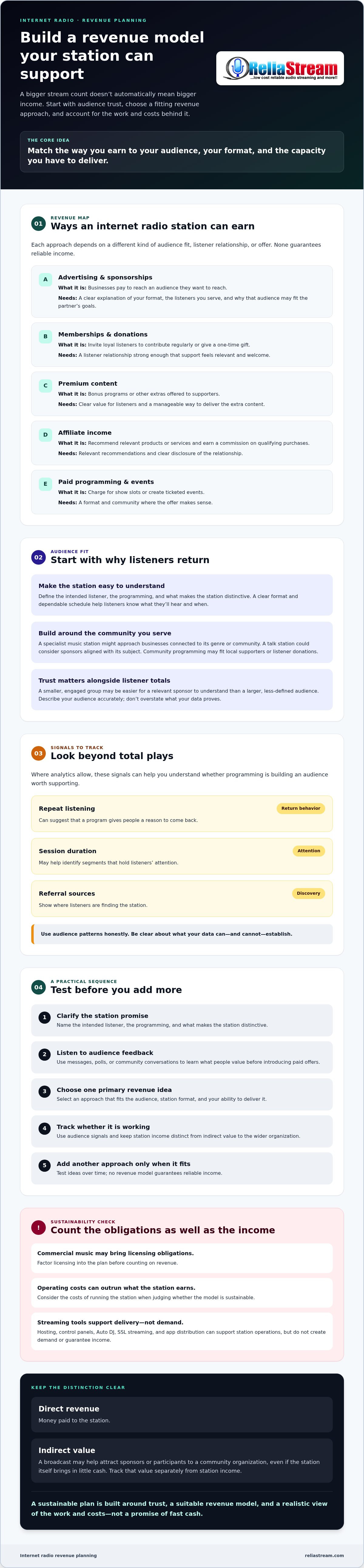
An internet radio station can earn income, but broadcasting alone doesn’t make it happen. Results depend on the audience you attract, the content you deliver, and how well you match a revenue approach to both. The Internet radio overview explains the medium’s technology and how it differs from traditional radio. The business question is what your station can offer listeners or partners in return for support.
Separate direct revenue, money paid to the station, from indirect value. A station run by a community group, for example, may help attract sponsors or participants to the organization, even if the broadcast itself brings in little cash. That value can matter, but track it separately from station income so you can judge whether the operation is sustainable.
Which internet radio revenue streams can you use?
Advertising and sponsorships give businesses access to an audience they want to reach. They aren’t guaranteed earnings: a sponsor needs a clear reason to believe your listeners fit its goals. Other options depend on a strong listener relationship or a specific offer:
- Memberships and donations: Invite loyal listeners to support the station through recurring contributions or one-time gifts.
- Premium content: Offer bonus programs or other extras to supporters, while keeping the value clear and delivery manageable.
- Affiliate income: Recommend relevant products or services and earn a commission when listeners make qualifying purchases. Disclose the relationship.
- Paid programming and events: Charge for show slots or create ticketed events when they suit the station’s format and community.
A revenue model describes how a station earns; a broadcasting or hosting tool helps it deliver the stream. Auto DJ, a control panel, or an app may support station operations, but none creates demand or guarantees income.
How do station format and audience affect income?
Start with who listens and why they return. A specialist music station might approach businesses connected to that genre or community. A talk station could consider sponsors whose services align with its subject matter. Community programming may be better suited to local supporters or listener donations. These are possible fits, not promises of different earnings.
Audience identity and trust can matter alongside listener totals. A smaller, engaged group may be easier for a relevant sponsor to understand than a larger, less-defined audience. Before pitching, be ready to describe your format, the listeners it serves, and what makes the station worth returning to. That’s a practical starting point for deciding how to make money with internet radio.
Build an Audience Advertisers and Supporters Have a Reason to Value
Before pitching sponsors or asking listeners to contribute, make your station easy to understand and worth returning to. A defined format and dependable schedule help people know what they’ll hear and when. That clarity also gives potential partners a sharper picture of the audience they may reach.
Define a station proposition listeners can repeat
Write a one-sentence promise that names your intended listener, your programming, and what makes the station distinctive. For example: “We bring local gardeners practical advice and interviews every weekday.” Keep the wording honest and specific. A music, community, talk, or specialist station can each build a clear proposition without needing the same format or making claims about likely income.
Make the promise real with recurring shows, recognizable segments, and a schedule listeners can follow. Then invite feedback through messages, polls, or community conversations. Learn what people value before introducing paid offers. Their feedback can reveal which programs are building connection and whether a membership, donation, or sponsor message would feel relevant rather than disruptive.
Measure audience signals before pitching sponsors
Total plays alone don’t tell the whole story. Where your analytics allow, distinguish plays from returning listeners and look at session duration and referral sources. Repeat listening can suggest that a program gives people a reason to come back; listening duration may help identify segments that hold attention. Referral sources show where listeners are finding you. Describe these patterns accurately, and be clear about what your data can and can’t establish.
A concise media kit can bring the evidence together. Include your station’s format, schedule, intended audience, available analytics, and a few clearly described sponsorship opportunities. Don’t inflate reach or imply that a sponsor will get a guaranteed response. A well-defined audience can be more valuable than a larger reach nobody can describe.
For broader context on listening habits, Pew Research Center’s fact sheet on online radio and podcast listenership provides research readers can explore. Use it as context, not as a substitute for your own station data. If you’re keeping operating costs lean while developing your format, see this guide to budget internet radio hosting. You can also review internet radio hosting options as one part of planning reliable delivery. Tools can support operations, but audience fit comes from programming, consistency, and trust.
How to Make Money With Internet Radio: Compare Options, Effort, and Trade-Offs
There’s no single best answer to how to make money with internet radio. The right test depends on your audience, content, available time, and costs. Use this comparison to narrow the field, not as a promise of earnings.
| Revenue source | Audience fit | Setup effort | Key dependency |
|---|---|---|---|
| Sponsorships | Defined audiences with clear interests | Moderate: identify prospects, prepare a pitch, and manage agreements | A genuine fit between sponsor and listeners |
| Advertising | Stations with an audience and content that meet an advertiser’s criteria | Low to moderate, depending on direct sales or an ad network | Eligibility, audience requirements, ad inventory, and platform terms |
| Listener support | Communities with loyal listeners who value the station | Moderate: explain the offer and maintain supporter benefits | Trust and a clear reason to contribute |
| Affiliate offers | Stations whose recommendations naturally connect to their programming | Low to moderate: select relevant offers and track referrals | Audience relevance, accurate disclosure, and affiliate terms |
| Paid shows | Stations with prospective hosts seeking airtime and a suitable format | Moderate to high: set policies, schedule programs, and manage payments | Host demand, programming standards, and clear agreements |
Which revenue model fits a small internet radio station?
For a small station with a well-defined community, listener support or direct outreach to a few relevant sponsors can be practical first experiments. An ad network may appear simpler, but check its eligibility rules, audience requirements, content policies, and payment terms before relying on it. Don’t assume a particular listener count unlocks revenue. Requirements vary, and income isn’t guaranteed.
Choose one option you can manage and measure. A focused test will teach you more than launching several offers at once.
What should broadcasters verify before monetizing?
First, check music and performance rights obligations for the content you broadcast and each territory where it’s received. Requirements can depend on the material and jurisdiction, so confirm current obligations with relevant rights holders or a qualified adviser. Don’t assume a hosting or monetization platform covers your situation.
Then review sponsor agreements, affiliate disclosure requirements, platform policies, and payment terms. Estimate what remains after operating expenses and applicable rights costs. Gross revenue is not net income. A station is on firmer ground when it knows both what money comes in and what it must spend to earn it.
How to Start Monetizing an Internet Radio Station Step by Step
Turn the idea into a small experiment before making it a core part of your station. A measured test can show whether listeners respond, what the work involves, and whether the approach makes sense to continue. Here’s a practical sequence for exploring how to make money with internet radio without counting on guaranteed income.
- Define your intended listener. Describe who your programming serves and what brings them back. A clear audience makes it easier to judge whether a revenue idea fits.
- Choose one primary experiment. Pick a sponsor category, listener-support option, or affiliate offer that connects naturally to your shows. Avoid launching several revenue streams at once, or it becomes harder to tell what’s working.
- Shape a specific offer. State what you’re offering, why it suits your audience, how it will appear on air or elsewhere, and what response you’ll measure. For example, a sponsor test could track inquiries from a clearly identified on-air mention.
- Check obligations and logistics. Before promotion, verify relevant rights requirements, agreements, disclosures, platform policies, payment terms, and any added workload. Account for operating expenses before judging the result.
- Review and adjust. Gather listener feedback and compare engagement, inquiries, sign-ups, conversions, or renewals, depending on the model. Then decide whether to refine, continue, or stop the test.
Turn a revenue idea into a small, testable offer
Keep the first offer focused. A specialist station might approach a business that genuinely serves its listeners, while a community station could invite regular listeners to support a particular programming goal. Explain the offer plainly and make it easy for people to respond. Ask listeners what felt relevant or intrusive, then use their feedback alongside actual response data. A quiet result is useful information, not a reason to overstate the opportunity.
Track results and improve without overpromising
Use a simple record of the activity and its results. For a sponsorship test, note outreach, replies, agreements, and renewal interest. For listener support, track sign-ups and continued contributions. Compare outcomes with the time and effort required over a consistent test period before expanding or adding another offer. Keep the review cadence realistic for your station, and record the same measures each time.
Streaming should support the plan, not be mistaken for the plan. Review your ongoing delivery requirements, audience capacity, and operating needs; this guide to internet radio hosting options can help frame that assessment. To evaluate hosting for your station’s streaming setup, explore ReliaStream hosting options. Reliable delivery helps run the station, but it can’t guarantee audience growth or revenue.
Choose Streaming Tools That Support a Sustainable Radio Business
Reliable streaming helps listeners hear your station as intended. It doesn’t create audience demand or guarantee revenue. Treat infrastructure as the operational foundation beneath your programming and income plan, then choose tools that fit how you broadcast and how listeners tune in.
Assess each need separately. Hosting delivers the stream; a control panel helps you manage station settings and programming; Auto DJ can support scheduled or continuous playback; SSL streaming provides a secure stream link; and apps offer additional ways to listen. You may need some now and others later. Match the setup to your audience’s listening habits, live versus automated schedule, and realistic growth plans.
What streaming infrastructure should a monetizing station assess?
Start with the stream format and bitrate your listeners can use comfortably, then consider the workflow required to manage live broadcasts and scheduled programming. Check whether you need an SSL link and which control panel functions fit your day-to-day operation. If automation is part of your plan, assess whether Auto DJ suits the schedule you want to maintain. For protocol context, read this ShoutCast versus IceCast comparison.
Also clarify which support and operating requirements matter to your station, and account for ongoing costs in your business plan. ReliaStream offers ShoutCast and IceCast hosting, MediaCP and Centova Cast plans, SSL Radio Link, and hosting bitrates up to 320 Kbps. Those tools can support station operations, but they don’t replace audience development or licensing checks.
When do radio apps help extend distribution?
Consider an app when you have a reason to believe listeners want to tune in through a particular device. Ask your audience how they listen and whether Roku, Google TV, Amazon Fire TV, or Alexa fits their habits. Review each platform’s current requirements before planning distribution. A custom app adds another listening route, not a guaranteed audience increase. Explore radio streaming app development options as you assess platform expansion.
Build only what your station can maintain. Start with the delivery setup that supports your current programming, then add tools when a real listener or operational need justifies them. If you’re reviewing hosting or app development for your station, explore ReliaStream’s radio hosting and app options. ReliaStream provides hosting and app development, not music royalty licensing; verify applicable rights obligations separately for your content and broadcast territories.
Build a Radio Business One Smart Test at a Time
There’s no guaranteed formula for how to make money with internet radio. Start with a clear audience and programming promise, then choose one revenue idea that genuinely fits your listeners. Track the response, the effort required, and what remains after operating and rights-related costs. Adjust before adding another income stream.
Solid streaming infrastructure helps you deliver the experience listeners expect, but it can’t create demand or promise revenue. ReliaStream has operated as an independent internet radio hosting provider since 2008, with ShoutCast and IceCast hosting, SSL streaming, Auto DJ options, and custom app development for Roku, Google TV, Amazon Fire TV, and Alexa. Music royalty licensing isn’t included, so check applicable rights obligations separately.
Ready to assess the delivery tools that fit your station’s current needs? Explore ReliaStream hosting and app options for your station. Keep the plan practical, learn from each test, and build on what your audience actually values.
Frequently Asked Questions
Can you make money with a small internet radio audience?
Yes, a small station can earn revenue if it serves a clearly defined, engaged community. A niche sponsor may value a close fit with listeners, while loyal supporters may contribute because they care about the programming. Neither approach guarantees income. Start with one modest offer, explain who it serves, and track responses alongside the time and costs involved. Audience fit and trust can matter as much as raw listener totals.
What is the most common way internet radio stations make money?
There isn’t one revenue model that’s most common across all internet radio stations. Advertising and sponsorships are familiar options, while stations may also rely on memberships, donations, affiliate offers, or paid programming. The right mix depends on the station’s format, audience, and capacity to manage each option. Rather than copying another station, choose a model that makes sense for your listeners and test it before building your budget around it.
How do internet radio stations get sponsors?
Stations usually approach potential sponsors with a clear explanation of their programming, audience, and proposed placement. Identify businesses or organizations whose products or services genuinely fit your listeners. Prepare a concise media kit with your schedule, available audience data, and sponsorship options. Be accurate about reach, and spell out what the sponsor receives, how payment works, and how either party can end the arrangement. A relevant, specific pitch beats inflated audience claims.
Can an internet radio station make money from advertising?
Yes, advertising can generate revenue through direct sponsor agreements or an ad network, but results aren’t guaranteed. Direct sales require finding suitable advertisers and managing placements. Ad networks may set eligibility rules or requirements related to audience, content, and platform use, so review their terms before relying on them. Track ad inquiries and completed placements, then compare the resulting revenue with the time, operating expenses, and other obligations involved.
Do internet radio stations need music licensing to earn money?
Licensing depends on what you broadcast and where the stream is received. Commercial music may involve rights for the sound recording and the underlying composition, while original, royalty-free, or directly permitted material may have different conditions. Don’t assume that hosting or an advertising service handles your rights obligations. Check current requirements with relevant rights holders or a qualified adviser for each broadcast territory before streaming music or accepting income.
How can listeners support an internet radio station financially?
Invite listeners to make one-time donations or sign up for recurring memberships. Explain what their support helps sustain, such as programming or station operations, and make the contribution process easy to understand. You could offer appropriate extras, like bonus content, if you can deliver them consistently. Keep the request transparent, thank supporters, and ask for feedback. Don’t promise benefits your station can’t maintain or assume every listener will choose to pay.
How much money can an internet radio station make?
There’s no reliable figure that applies to every station. Income depends on audience fit, programming, revenue model, sponsor demand, and execution, while expenses and rights obligations affect what remains. To estimate how to make money with internet radio sustainably, track actual payments and subtract relevant operating and licensing costs. Treat early results as evidence, not a forecast. Test one revenue approach, review its performance over time, and adjust before expanding.


