

What if your most popular post still isn’t bringing anyone to the radio? Using social media to promote radio station listenership takes more than collecting likes. Every post needs a clear next step: discover the station, open the live stream or a show page, and find a reason to return.
It’s frustrating to post regularly without knowing whether your effort is growing your audience. When time and staff are limited, choosing platforms and content formats can feel like another full-time job. The answer isn’t to post everywhere. Build a focused routine around the listeners you want to reach, then make it easy for them to tune in.
This practical 2026 guide covers what to post, how to turn on-air moments into social content, and how to connect each post to a clear listening destination. You’ll also learn how to track clicks, listening activity, and repeat engagement so you can see what’s working and adjust. Less guesswork, more posts that move people from scrolling to listening.
Key Takeaways
- Use a practical approach to social media that supports radio station discovery, sampling, and repeat listening.
- Build a focused content mix from show previews, host moments, listener participation, and behind-the-scenes updates.
- Choose platforms and formats that match your audience and your team’s capacity to create and maintain content.
- Turn one program topic into distinct posts for different channels, then make time to respond to listeners and review results.
- Give every post a clear next step, with an easy route to the right live stream, program, or on-demand experience.
Why social media promotion matters for a radio station
Social media promotion uses platform content to help people discover a station, sample its programs, and return to listen. A host clip, show preview, or listener question can introduce the station to someone who hasn’t tuned in before. The next step is to make that first encounter lead somewhere useful.
Set goals that connect social activity to the station’s priorities: awareness among relevant listeners, live stream starts, discovery of a particular show, community interaction, or repeat listening. Choose a goal that fits each post. A question inviting music requests may be intended to start a conversation; a preview of a live show should make it easy to listen. Social media marketing principles offer a useful foundation, but apply them with your listeners’ path to the stream in mind.
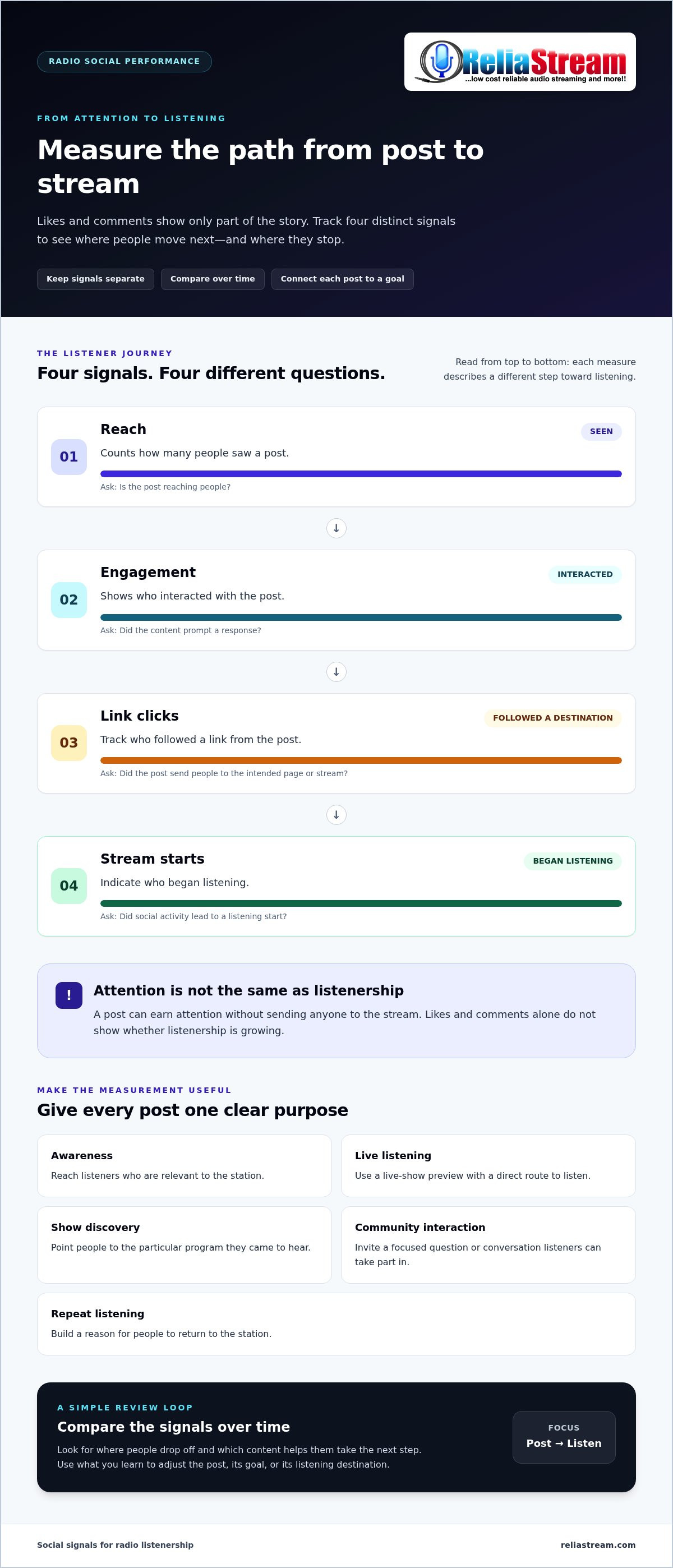
Keep the signals separate. A post can earn attention without sending anyone to the stream, so likes and comments alone don’t show whether listenership is growing. Reach counts who saw a post, engagement shows who interacted, link clicks track who followed a destination, and stream starts indicate who began listening. Compare these measures over time to see where people drop off and which content helps them take the next step.
Start with the listener you want to reach
Be specific about who each show serves. Consider listeners’ interests, routines, location, and the programs they’re most likely to choose. A local breakfast show might share a timely community question, while a specialist music program could preview a genre or artist-focused segment. Use listener requests, recurring questions, and community conversations as prompts for posts that feel relevant rather than generic.
Separate audiences by show or interest only when it changes the content or the next step. Otherwise, keep planning simple. This focus makes using social media to promote radio station programming more intentional: speak to a listener’s interests and make the invitation match what they can do next.
Give every promotion a clear destination
Choose one action for each post: listen live, visit a show page, explore an on-demand program, or send a request. Label the link plainly, such as “Listen live” or “Explore the show,” and make it easy to find. Avoid sending people to a general page if they’ll have to search again for the program they came to hear.
Consider the experience after the click, too. A mobile-friendly stream link or station app can make it easier for listeners using a phone to tune in. App access on platforms such as Roku, Google TV, Amazon Fire TV, or Alexa can offer other ways to listen. Keep the destination consistent with the post’s promise. One clear path is better than several competing links.
Plan radio station social media content that earns attention
A strong content plan doesn’t need a constant stream of new ideas. Build a small mix from what the station already does well: show previews, presenter voices, listener participation, and useful behind-the-scenes moments. Give each post a job. A preview can encourage someone to tune in; a question can spark conversation; a presenter introduction can help a new listener find the right show.
Useful, consistent content gives listeners a recognizable reason to stop, engage, and come back to your station. Keep posts accessible: use concise copy, explain who or what a clip features, add captions to video, and write descriptive text for images. Don’t assume everyone already knows the show, presenter, or context.
Turn programming into posts listeners can act on
Start with one specific moment in the schedule: a guest interview, a topic on today’s program, or a segment airing at a clear time. Then give people a direct prompt, such as “Listen live at noon for the conversation” or “Send your question before the show.” Specific details help people understand what they’ll get by tuning in, and a clear listening prompt can turn interest into a stream start.
Short clips can bring a host’s personality or a discussion to life, but share them only when the audio and other material are cleared for that use. Commercial music in an on-air broadcast isn’t automatically cleared for social platforms. Use music permitted for the platform, obtain the appropriate direct permissions, or follow the platform’s applicable music-use policies. Add enough context for each clip to make sense outside the full program.
Invite song requests or questions when the show can respond meaningfully. A focused invitation, such as “What local issue should we discuss this week?”, gives listeners a clear way to participate and the station a useful programming signal. If the team can’t follow up, choose a different prompt.
Make community and behind-the-scenes content feel authentic
Introduce presenters in their own voices. Share what they cover, when their programs air, and what listeners can expect. Studio preparation, a quick look at how a segment comes together, or a relevant local story can make the station feel human without turning every post into an advert. Keep private information and sensitive details out of frame.
Ask questions that are easy to answer and connected to the station’s programming. “Which local event should we cover next?” is more useful than a vague request to comment. Reply to responses, acknowledge ideas, and bring worthwhile conversations into a show when appropriate. That connection makes social activity more than a reaction count: it gives people a reason to listen for what happens next.
For posts that lead to listening, make sure the destination works smoothly on mobile. An internet radio streaming setup can provide a clear route from a social post to the station’s stream.
Choose social platforms and formats that fit your radio audience
The best platform is one your intended listeners use and your team can maintain with useful, relevant posts. Don’t spread limited time across every channel. Start with a manageable selection, match each channel to a content strength, then review engagement and listening-path activity before adding another. A platform may earn attention, but each post still needs a clear route to the station’s stream or show.
Use this comparison as a starting point, not a promise of reach. Audience fit depends on your station, programs, and the communities you want to reach.
| Format or channel | Good fit for | What to consider |
|---|---|---|
| Short-form video | Host introductions, brief program moments, and visual behind-the-scenes updates | Add captions and context; producing clips takes time, and audio must be cleared for social use. |
| Image-and-text posts | Show schedules, guest announcements, and recurring reminders | Keep text readable and information current; use descriptive wording so the message isn’t only in the image. |
| Community groups | Local conversations, listener questions, and community-focused programming | Participation needs active moderation and genuine replies, not just promotional posts. |
| Professional networks | Industry updates, station partnerships, and conversations with professional communities | Use this channel when those audiences matter to your station, and tailor the message to their interests. |
Match the format to the message
Choose a format that makes the next step obvious. A short clip can introduce a presenter or share a compelling program moment cleared for social use. A static graphic can make a schedule or guest announcement easy to scan. Text-led posts work well for questions, listener prompts, and topics that need more explanation. In every format, name the show or presenter, provide essential context, and include a direct listening prompt when tuning in is the goal.
A practical approach to using social media to promote radio station programming starts with the audience and the message, not the trend. Adapt the same program idea to each channel instead of reposting identical content everywhere.
Make the listening path easy on every device
Before publishing, open each social link on a phone and check that it leads to the intended station experience. Confirm that the stream starts as expected and that the destination is clearly labeled. Link to a relevant listening page, direct stream, or station app destination rather than making people search for the program again.
For stations exploring app access on connected TVs and other listening platforms, radio streaming app development offers more context on extending the listening path beyond social feeds.
Build a repeatable radio station social media promotion workflow
A dependable routine beats a burst of posts followed by silence. Assign one person to own the calendar and publishing process, even if several presenters contribute ideas. For a small team, a shared document or calendar can be enough, though platforms like SocialPosterr can help coordinate multi-channel publishing and audience engagement. Keep the workflow simple: plan, produce, schedule, engage, and review. This gives everyone a clear role without turning social media into a second broadcast schedule.
Create a lightweight weekly content calendar
Set aside time each week to map upcoming programs, timely station updates, and listener interaction. For each planned post, record its audience, purpose, format, publication time, and destination. Leave room for relevant community moments or breaking local updates. A flexible plan is easier to maintain than a packed calendar with no space to respond.
Repurpose one program topic into distinct posts rather than duplicating the same copy everywhere. For an interview, you might publish a short guest introduction before the show, a question prompt that invites listener responses, and a follow-up post pointing to the program or stream. Each post has its own angle and action while staying connected to the same topic.
During the week, publish scheduled content, respond to comments and messages, and note questions worth bringing back to the show. Workspace tools such as frik.io can help teams create, schedule, and publish posts across multiple networks from a single dashboard. At the end of the cycle, review what attracted attention and what helped listeners reach the stream. That rhythm makes using social media to promote radio station listening more deliberate and easier to repeat.
Measure what happens after a listener clicks
Track a small set of measures: post reach, meaningful interactions, link clicks, stream starts, and returning listeners where those figures are available. If your analytics tools support campaign tags, add consistent labels to social links. These tags identify which channel or campaign a visit came from, making it easier to compare activity in website or stream analytics.
Look at the path, not just the totals. A post may earn clicks but few stream starts, which could point to a confusing destination or a listener who needs more context. Compare similar posts over time and treat patterns as clues, not proof that one post caused a rise in listening. Programming and timing can also influence results.
Make sure each post leads to a reliable listening destination. ReliaStream provides ShoutCast and IceCast internet radio hosting, with SSL-secured stream links among its hosting options. Explore internet radio hosting options for a clear destination listeners can reach from social content.
Turn social discovery into a reliable listening habit
A social post can introduce the station, but a smooth listening experience gives a new listener a reason to stay. Build a clear path: someone sees a post, understands what’s on, opens the stream, and knows when or how to return. Make each step match the post’s promise. If it promotes a particular show, send listeners somewhere they can access that show or hear the live broadcast without searching again.
Remove friction between a post and the live stream
Make the call to action specific. “Listen live now for the local news update” tells people what they’ll hear and when; “Check us out” doesn’t. Before sharing a link, test it on a mobile device and confirm it opens the intended station stream or listening page. Check that the page loads clearly, listeners can recognize the station, and the play control is easy to find.
A secure stream link can support a more reassuring listening experience. ReliaStream hosting includes SSL-secured stream links; read this guide to SSL radio streaming guidance for more on secure listening links. Keep the link label plain and accurate so listeners know where a tap will take them.
Make the station easy to revisit
Recognition builds habit. Use consistent program names, schedules, and presenter identities across posts and listening destinations. Invite people to follow the station for updates or return for a specific upcoming show. After a program, a follow-up post can point to the next broadcast or an available on-demand version, giving a first-time listener a natural reason to come back.
Social links are one route into listening, not the only one. Station apps for Roku, Google TV, and Amazon Fire TV, along with Alexa streaming access, can give audiences additional ways to tune in. Present these as convenient options alongside a clear social call to action, not as a replacement for telling people what to listen to next.
For a practical reset, review the stream destination you currently share. Choose one audience, plan one week of posts around its interests, and make sure every listening link works as intended. Then watch which posts lead people beyond the feed and give them a reason to return. ReliaStream’s internet radio hosting and listening options can provide destinations for that journey.
Make your next social post lead somewhere
Effective radio promotion isn’t about posting everywhere. It’s about choosing content your audience cares about, matching each post to a clear next step, and building a routine your team can sustain. Using social media to promote radio station listening works best when you measure more than reactions: track link clicks, stream starts, and signs that listeners return.
Start small. Choose one audience, plan a week of relevant posts, and check that every link opens the right listening destination. Then review what helped people move from discovery to tuning in and refine the next week’s plan.
That journey depends on a stream listeners can access with ease. ReliaStream provides ShoutCast and IceCast hosting with SSL-secured links, plus custom radio apps and Alexa streaming skills that can extend listening access.
Keep the plan focused, stay curious about what your listeners respond to, and make it easy to press play. Small, consistent steps can build lasting momentum.
Frequently Asked Questions
How can social media help promote a radio station?
Social media can introduce your station to potential listeners, highlight programs, and give your community a place to interact with hosts. A preview of an upcoming show can spark interest, while a clear link can help someone move from a post to the live stream. Using social media to promote radio station listening also means measuring that journey. Likes and comments are useful engagement signals, but don’t show by themselves whether people tuned in.
Which social media platform is best for a radio station?
What should a radio station post on social media?
Share content that helps people understand what your station offers and gives them a reason to respond or tune in. Useful options include show previews, host introductions, schedule reminders, listener questions, and short program clips cleared for social use. Add context so people know which show or presenter they’re seeing, and include captions on video. When you promote a specific program, say what listeners can expect and give them a clear next step.
How often should a radio station post on social media?
Post at a pace your team can sustain while keeping the content useful and consistent. There’s no universal frequency that fits every station, audience, or platform. Start with a simple calendar for upcoming shows, station updates, and listener interaction. Then review audience responses and available listening data. If quality or replies start slipping, reduce the workload; if the routine is manageable and results are promising, adjust it gradually.
How do you get social media followers to listen to an online radio station?
Connect a relevant post to a clear, tested listening link. Tell people what they’ll hear and when, then make sure the link opens the intended stream or program page, especially on mobile. Avoid vague prompts that leave the next step unclear. Track link clicks alongside available website or stream analytics to understand whether people continue from the post to listening. Use those patterns to improve the message, link destination, or program context.
Can a small radio station promote itself on social media with a limited team?
Yes. A small team can keep promotion manageable by choosing a focused set of channels, assigning one person to coordinate publishing, and using a shared calendar. Repurpose a program topic into distinct posts, such as a preview, a host introduction, and a listener question, rather than creating every post from scratch. Schedule planned content, leave room for timely community updates, and set aside time to respond to listeners.
How can a radio station measure whether social media promotion is working?
Track reach, meaningful engagement, link clicks, stream starts, and returning listeners where those figures are available. Reach shows how many people saw a post, while engagement records interactions; neither proves that someone listened. Compare link and stream activity over time, using consistent campaign tags if your analytics tools support them. Look for patterns across similar posts, but treat them as clues rather than proof that a single post caused listening growth.
Ready to give your social audience a clear place to listen? Explore ReliaStream’s ShoutCast and IceCast hosting options.


